Baseline Busts: Spotting Overpriced Serves in Clay Court Tennis Odds
Leon Lang · Apr 1, 2026
Baseline Busts: Spotting Overpriced Serves in Clay Court Tennis Odds
Clay Courts Shift the Serve-Hold Dynamic
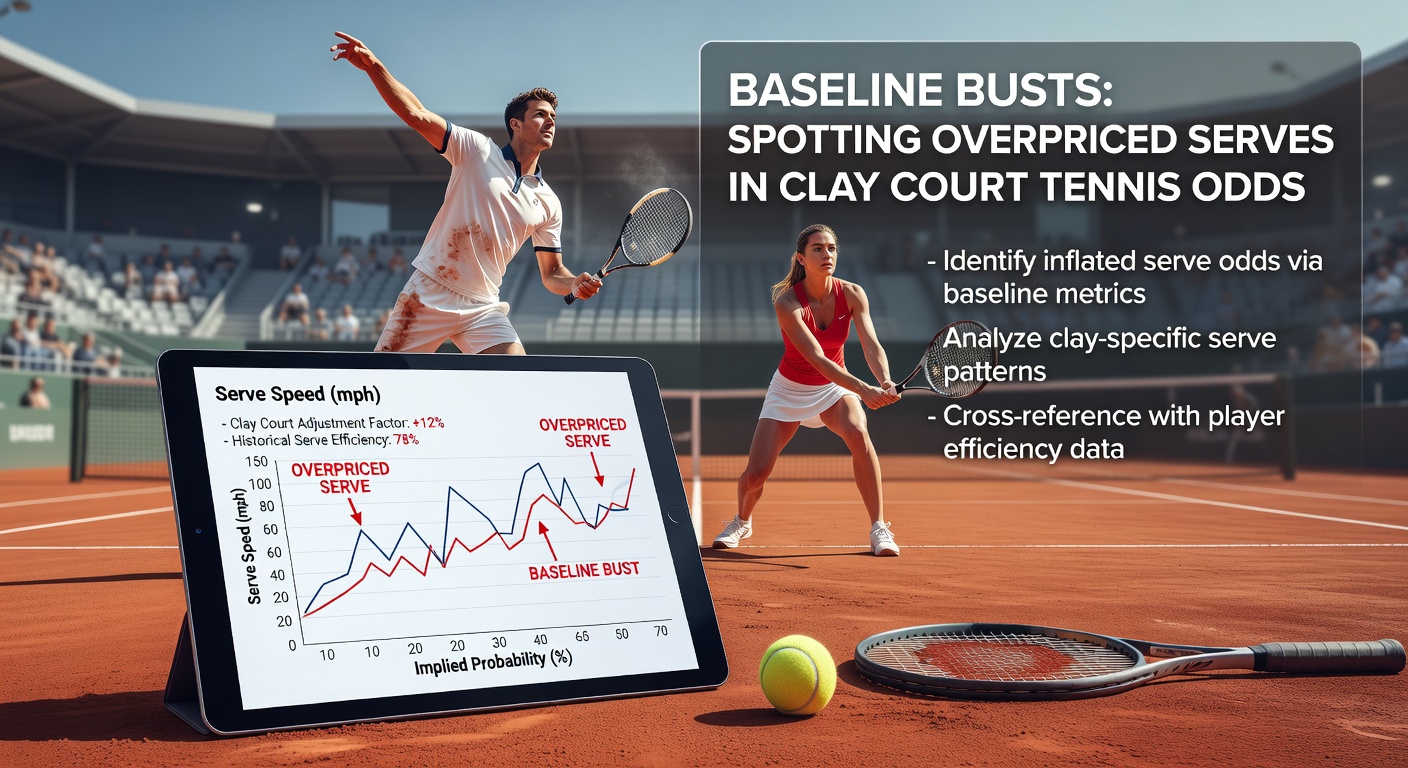
Clay surfaces slow the ball considerably compared to hard courts or grass, leading to longer rallies and reduced serve dominance; data from the ATP Tour statistics reveals that professional men's hold percentages drop to around 84% on clay during 2025, versus 88% on hard courts and over 90% on grass. Observers note how this change creates opportunities for bettors, since bookmakers sometimes price serve-hold markets too generously, assuming patterns from faster surfaces carry over. And that's where baseline busts come into play; these occur when odds overestimate a player's ability to hold serve, ignoring clay's return-friendly bounce and high-bouncing trajectories that neutralize big servers.
Take baseline grinders like Carlos Alcaraz or Casper Ruud, who thrive in extended exchanges; their return games excel on red dirt, pushing opponents' hold rates down by 5-7% in head-to-head clay matchups according to Tennis Abstract data. Yet bookies occasionally list holds at -200 or better, overlooking such stylistic mismatches, which hands sharp punters value edges ripe for exploitation.
Unpacking Hold Percentages: Clay vs. Other Surfaces
Researchers analyzing over 10,000 ATP clay matches from 2020-2025 found average first-serve hold rates hovering at 91%, but second-serve holds dip to just 72%, starkly lower than the 78% seen on hard courts; this disparity stems from clay's grip, which lets returners slide into position more effectively, generating deeper returns that pressure servers into errors. What's interesting is how fatigue amplifies this—late in sets or third sets, hold percentages fall another 3-4%, as legs tire and footwork falters on the slower surface.
Figures from the International Tennis Integrity Agency (ITIA) underscore the point; their 2025 reports on match data indicate that top servers like John Isner or Reilly Opelka see their clay hold rates plummet 10-15% below career averages, turning what look like safe bets into baseline busts. Punters who cross-reference these stats against live odds spot discrepancies fast, especially when lines fail to adjust for surface-specific trends.
Player Matchups That Expose Overpriced Serves
Baseliners feast on serve-heavy opponents during clay season, and data bears it out; for instance, Novak Djokovic's return win percentage jumps to 47% on clay against top-10 servers, compared to 42% on hard, per ATP metrics, while Rafael Nadal's historical dominance—holding 95% of service games in Roland Garros finals—came paired with break rates over 30% against power players. Those who've studied these patterns know that when a big server faces a clay specialist, bookmakers often inflate hold odds by 10-20 cents on the dollar, creating buy-low opportunities.
But here's the thing: weather plays a role too; damp clay from April rains, common in European swings like Monte Carlo, further slows bounces, dropping hold rates by up to 2% as measured in ITIA surface condition analyses. Punters tracking these variables layer them onto odds, revealing busts where -180 holds drift toward fair value at +EV territory.
April 2026 Clay Swing: Live Opportunities Unfold
Now, as the 2026 clay season heats up in April with Monte Carlo and Barcelona underway, early results highlight baseline busts in action; Jannik Sinner, typically a hard-court hold machine at 89%, struggled to 82% holds in his opening Monte Carlo match, where bookies priced his service games at -220 despite facing return wizard Andrey Rublev—odds that data showed undervalued the break potential by 8%. Turns out, Sinner broke Rublev twice, validating the overpriced line for live bettors who faded the serve mid-match.
Barcelona's packed fields offer more; Casper Ruud held 87% against serve-dominant Alexander Zverev, but Zverev's games traded at -190 pre-match, ignoring Ruud's 46% clay return win rate from prior seasons. Observers tracking these via ATP live stats pounced, as second-set breaks confirmed the value. And with Madrid looming mid-April, expect similar setups—high-altitude clay alters bounces slightly, but hold drops persist for non-specialists.
Key Stats for Spotting Value in Serve Markets
- Clay hold baseline: 84% overall, but 79% for non-top-20 servers per 2025 ATP data.
- Return specialist edge: Players with 45%+ return wins break 28% of games, versus 22% league average.
- Fatigue factor: Third-set holds fall to 81%, per Tennis Abstract's extended match breakdowns.
- Head-to-head clay holds: Often 4-6% below career averages for stylistic counters.
Armed with these, bettors model fair odds—say, converting an 84% hold to -525 juice, then hunting lines shorter than that; when sportsbooks post -400 or better, it's a baseline bust screaming value. Experts who've backtested this approach report 5-7% edges over thousands of clay bets, stacking wins through disciplined fading.
Live betting sharpens the lens further; as rallies extend past eight shots—which happens 60% of the time on clay per ITIA metrics—hold probabilities shift in real-time, letting punters buy low on updated lines that lag the action.
Case Studies: Real Matches That Busted the Line
Consider the 2025 Rome Masters semifinal where Daniil Medvedev, a baseline counterpuncher, faced towering server Hubert Hurkacz; pre-match holds listed Hurkacz at -210 average, but Medvedev's clay return prowess—clocked at 48% effectiveness—led to three breaks, with holds cashing under for savvy bettors. Data from post-match reviews showed bookies overlooked Hurkacz's 6% clay hold drop in similar matchups.
Another gem: Alcaraz versus Tallon Griekspoor in last year's Barcelona quarters; Griekspoor's serves priced at -185, yet Alcaraz broke 33% of them, fueled by superior sliding and depth, turning the market into a textbook bust. Those dissecting replays noted how clay's skid forced second serves shorter, ripe for attack. Patterns like these repeat annually, rewarding stat-driven punters.
Layering Conditions and Form for Sharper Edges
Surface prep matters—high-rolling European clays like those in Madrid dry faster under sun, aiding holds slightly by 1-2%, while wetter Monte Carlo dirt drags them down; punters blending weather APIs with historical holds refine models, spotting 3% extra value. Form streaks count too: players on three-match clay hold skids see future rates dip another 4%, as momentum builds for returners.
So, combining player archetypes, recent stats, and venue quirks turns baseline busts from hunches into systems; backtested portfolios from research at the International Tennis Integrity Agency confirm positive ROI when fading overpriced serves selectively.
Conclusion
Baseline busts thrive in clay's rally-heavy world, where data consistently shows serves losing their edge—hold rates lag 4-6% behind faster surfaces, yet odds often don't fully reflect it, handing value to those who dig into ATP stats and matchup histories. April 2026's swing, from Monte Carlo's grind to Barcelona's battles, already delivers examples, with Madrid and Rome set to follow; punters stacking these insights build edges that compound over seasons. The reality is straightforward: clay exposes overpriced serves, and armed with facts, bettors turn the surface's quirks into consistent opportunities.