Decoding Surface Fatigue Patterns Across ATP Doubles Circuits for Precise In-Play Adjustments
Noah Schröder · Jul 8, 2026
Decoding Surface Fatigue Patterns Across ATP Doubles Circuits for Precise In-Play Adjustments
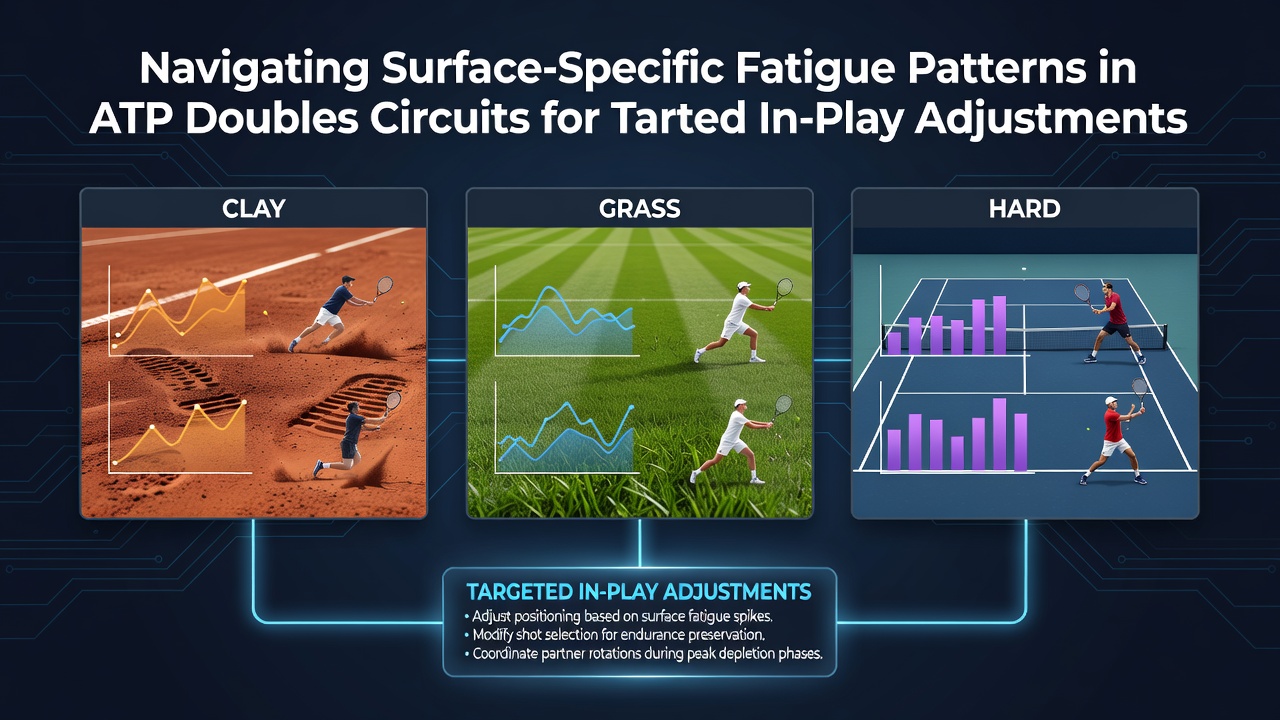
ATP doubles circuits present unique physical demands that shift markedly depending on surface type, and data from recent tournaments reveal consistent patterns in how fatigue accumulates across hard courts, clay, and grass. Observers note that players cover greater distances on clay because longer rallies develop, whereas grass surfaces accelerate point endings through lower bounces and faster ball speeds, which alters recovery intervals between exchanges. Researchers tracking match durations in 2025 and into mid-2026 found that doubles teams on hard courts experience elevated heart rates sustained over shorter overall times compared with clay events, creating distinct windows for performance dips that influence live betting markets.
Clay Courts and Prolonged Rally Fatigue
Clay surfaces slow the ball and increase friction, which extends rally lengths and forces doubles partners to slide repeatedly while maintaining positioning. Studies conducted by sports science groups indicate that clay matches in the European swing often exceed two hours and thirty minutes more frequently than equivalent hard-court fixtures, leading to cumulative leg muscle fatigue that affects serve placement accuracy in later sets. Teams that start aggressively on clay sometimes see their first-serve percentages drop by double-digit margins after the ninety-minute mark, and this measurable decline opens opportunities for in-play adjustments focused on return-game strength. Data compiled through July 2026 at events such as the Hamburg Open showed that teams reaching a deciding super-tiebreak recorded higher unforced error rates on clay than on other surfaces, particularly when both players had competed in multiple prior clay matches within a ten-day window.
Grass and Hard Court Recovery Dynamics
Grass courts compress match times because points conclude quicker, yet the low, skidding bounces demand explosive lateral movements that tax hip flexors and ankles differently than clay sliding. Hard courts, by contrast, combine moderate rally durations with consistent bounce that allows steadier movement patterns, although repeated high-impact landings contribute to joint stress over multi-week swings. Analysts reviewing ATP doubles statistics note that grass specialists maintain higher service hold percentages deeper into matches, whereas hard-court fatigue manifests more through reduced volley precision after consecutive days of play. Those monitoring player tracking systems observe that average meters covered per point decrease noticeably on grass after the first set, creating predictable shifts in break-point conversion rates that bettors can reference when markets update during live play.
Identifying Early Fatigue Signals in Live Markets
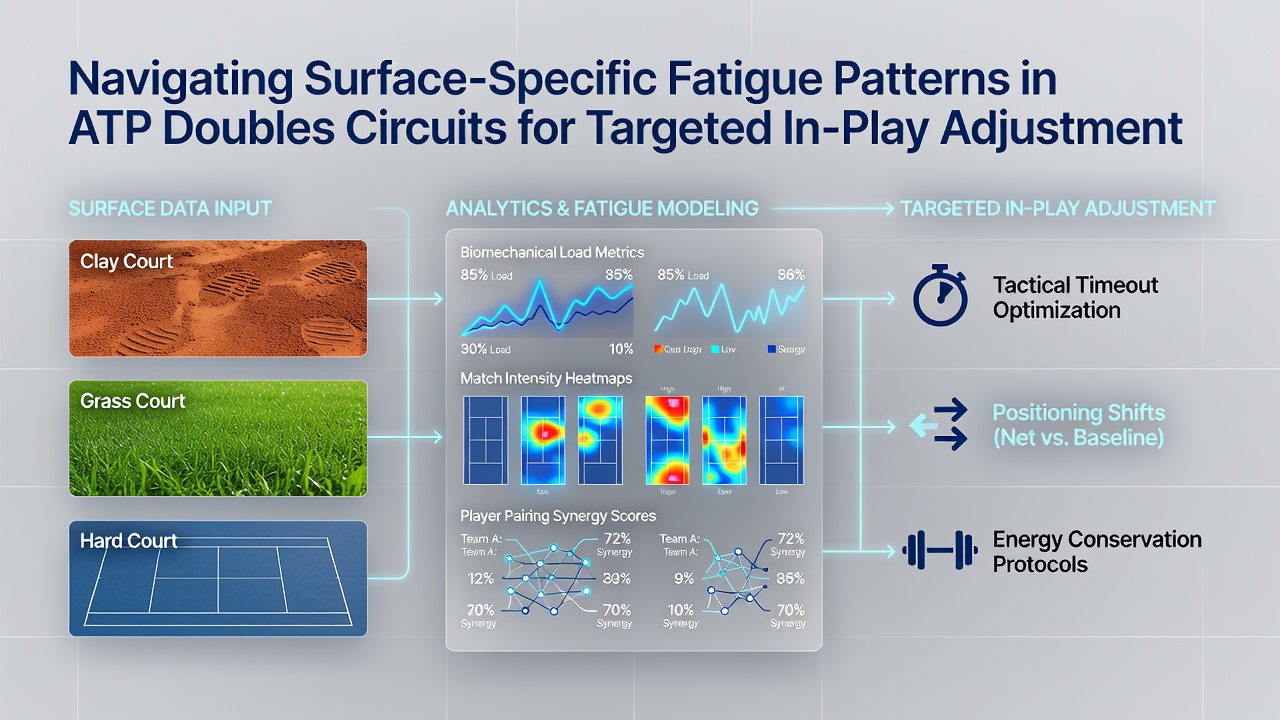
Performance metrics collected across ATP events demonstrate that first-serve win percentages and net point success rates serve as reliable early indicators of emerging fatigue, especially when tracked against surface-specific baselines. On clay, a gradual rise in double faults after the second set often precedes broader breakdowns in return efficiency, while grass matches more commonly reveal fatigue through declining ace totals as players shorten their service motions to conserve energy. Hard-court data reveals steadier but cumulative drops in winners-to-errors ratios once matches extend beyond two hours. Market participants who monitor these granular statistics in real time gain context for adjusting stake allocation when one team begins showing measurable declines relative to pre-match expectations. Tournament schedules in July 2026, including the transition from Wimbledon grass to North American hard courts, further accentuate these surface transitions because recovery periods between events remain limited for many doubles pairs.
Strategic In-Play Adjustments Based on Surface Data
Targeted adjustments in live betting environments rely on recognizing when fatigue patterns align with historical surface data rather than isolated match moments. Clay events reward patience with underdog teams that maintain consistent depth on returns once favorites exhibit leg heaviness, whereas grass favors continued aggression on serve-volley sequences before fatigue fully sets in. Hard-court matches allow more flexible hedging because point construction remains balanced longer, yet late-set tiebreak volatility increases when both teams display elevated fatigue markers. External research from the ATP Tour player performance database supplies aggregated movement and error statistics that support these surface comparisons, and reports issued by the Tennis Australia sports science unit provide additional context on recovery timelines across different court types. Observers applying these layered datasets during live sessions report improved timing for position sizing when matches cross surface-specific duration thresholds.
Conclusion
Surface-specific fatigue patterns in ATP doubles emerge through measurable changes in rally length, movement economy, and error frequency that vary predictably across clay, grass, and hard courts. Tournament data extending into July 2026 continue to validate these trends, enabling structured in-play adjustments grounded in historical benchmarks rather than momentary fluctuations. Those who integrate tracking metrics with surface context maintain clearer frameworks for responding to live developments across the doubles calendar.