Environmental Variables and Their Impact on Line Shifts in Sports Betting Markets
David Schulz · Jul 3, 2026
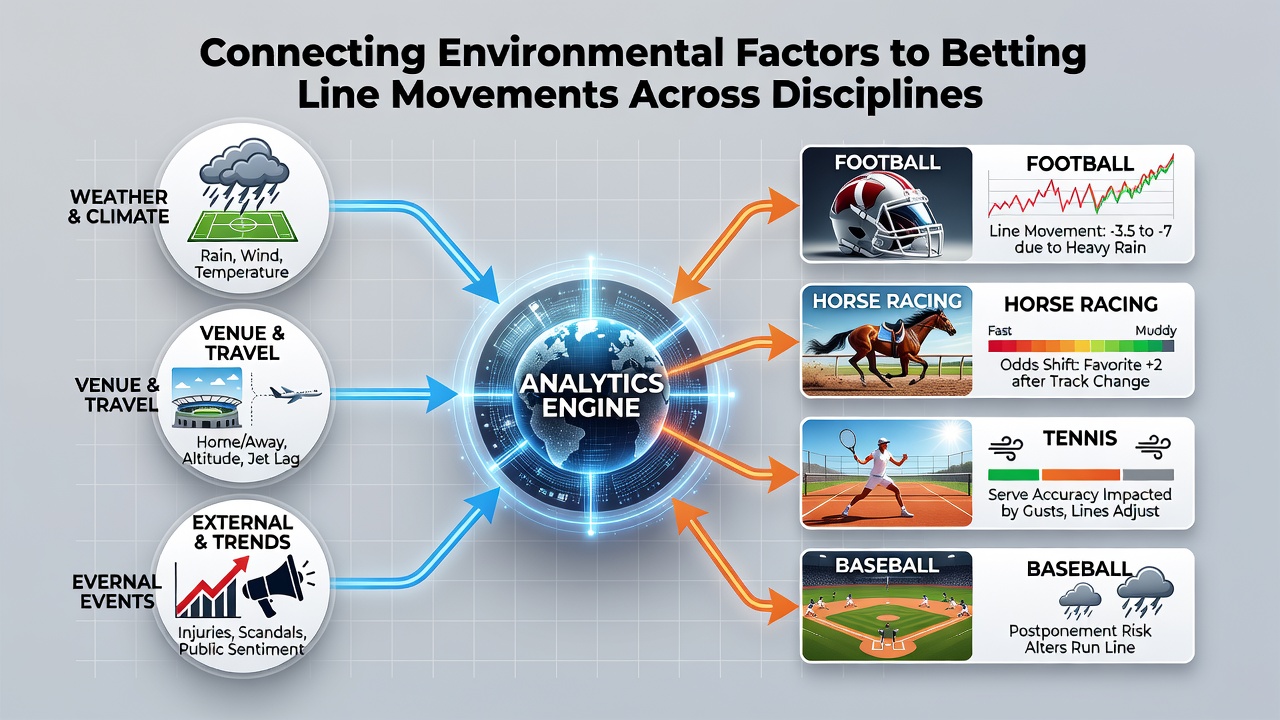
Environmental Variables and Their Impact on Line Shifts in Sports Betting Markets
Environmental conditions shape how betting markets adjust lines across sports and racing disciplines, and researchers continue to track these connections through performance data and odds movements. Weather elements such as temperature, precipitation, wind speed, and humidity interact with venue characteristics like altitude and surface type to influence player output, animal performance, and ultimately the numbers that bookmakers set and shift.
Studies on outdoor events show that rain and high winds often push totals lower in football and tennis while prompting oddsmakers to widen spreads in favor of defensive or ground-based strategies. In horse racing, soft or heavy ground alters pace expectations and leads to revised win probabilities for certain runners based on historical records from similar conditions at the same tracks.
Weather Patterns and Line Adjustments in Team Sports
Football and baseball markets demonstrate consistent responses to forecast changes, and data compiled over multiple seasons reveal that heavy precipitation correlates with reduced scoring rates in both sports. Bookmakers monitor radar updates and adjust totals downward when storms are projected to arrive during game windows, while wind direction and speed further modify totals and side lines in exposed stadiums. Observers note that these shifts occur rapidly once official weather services release updated bulletins, creating measurable movement in the hours leading up to kickoff or first pitch.
Baseball lines also reflect temperature effects on ball flight, and analysts have documented higher run totals in warmer conditions at certain parks where altitude and humidity amplify carry. In July 2026, several series played in high-heat environments produced totals that exceeded pregame expectations, prompting oddsmakers to incorporate real-time temperature readings into their models more aggressively than in prior years.
Altitude, Surface Conditions, and Racing Disciplines
Altitude influences endurance events and high-elevation racecourses, where thinner air reduces oxygen availability and changes pacing strategies for both human athletes and thoroughbreds. Data from events held above 5,000 feet indicate slower overall times in distance races and altered win probabilities that betting markets incorporate through adjusted morning lines and in-race odds. Surface moisture levels at tracks produce similar recalibrations, and researchers have compiled databases showing that certain sires and jockey-trainer combinations maintain stronger records on wet versus firm ground.
Tennis markets respond to court surface interactions with humidity and temperature as well, and grand slam events held in variable climates often see set-by-set line adjustments when players adapt to changing grip and ball behavior. Those who study these patterns find that serve-heavy competitors gain edges on faster, drier courts while baseline players perform better under slower, heavier conditions created by moisture.
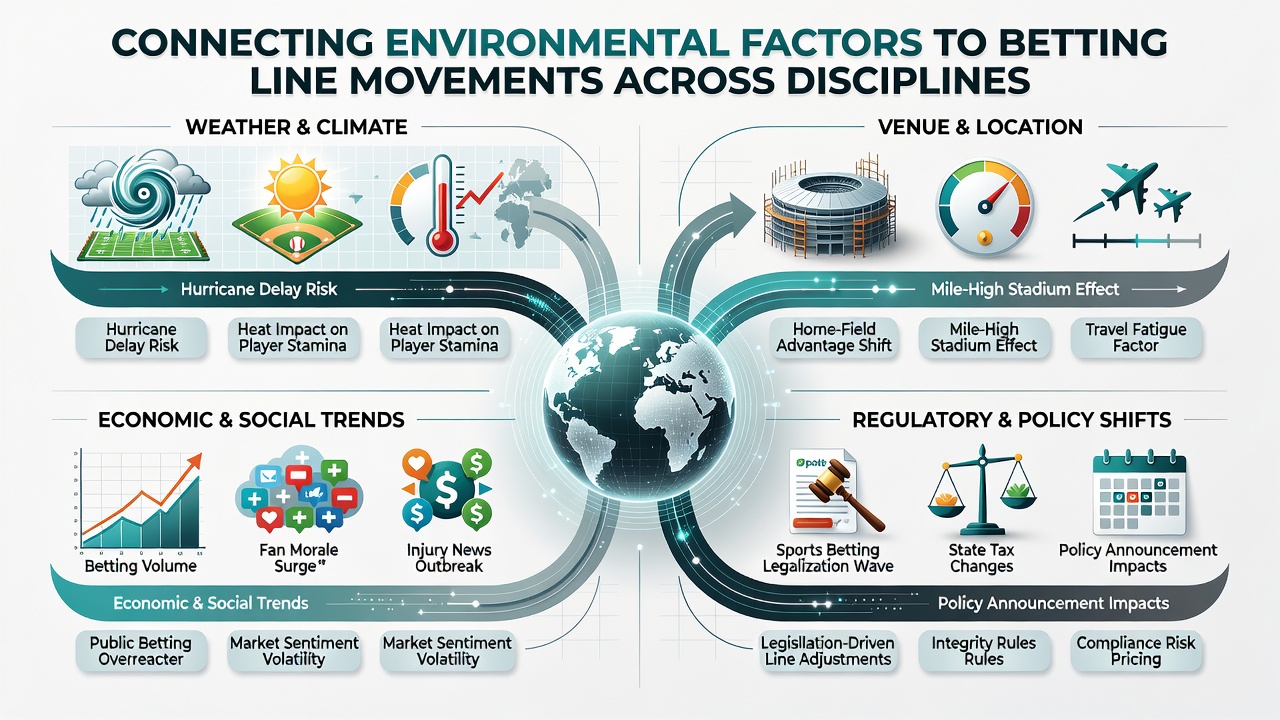
Cross-Discipline Data Integration and Market Responses
Industry reports from organizations such as the National Oceanic and Atmospheric Administration supply granular weather datasets that quantitative teams feed into predictive models, and these inputs help explain line movements that appear across seemingly unrelated sports. Academic papers published through university sports science departments have examined correlations between environmental variables and performance metrics, revealing that wind and temperature exert measurable effects on both team totals and individual prop bets. Bookmakers integrate these findings into their risk-management systems, allowing lines to move preemptively when forecasts diverge from seasonal norms.
Cycling and golf markets provide additional examples where terrain elevation profiles combined with wind forecasts drive substantial odds adjustments, and live betting volumes increase as conditions evolve during multi-stage events. Observers tracking these disciplines report that early weather deviations often trigger larger line shifts than late changes because bettors and syndicates have more time to react before events conclude.
Monitoring Tools and Future Tracking Methods
Advanced analytics platforms now combine satellite imagery, ground sensors, and historical performance archives to forecast environmental impacts with greater precision, and this information flows directly into the algorithms that generate and revise betting lines. Regulatory bodies in multiple jurisdictions, including the Nevada Gaming Control Board and the Australian Competition and Consumer Commission, require operators to maintain records of how external data sources influence odds, which has encouraged greater transparency around the use of weather and venue metrics.
Those who analyze betting data across seasons continue to refine models that isolate environmental contributions from other variables such as injuries or roster changes, and the resulting insights support more accurate line setting in both pregame and in-play markets. As data collection expands in 2026 and beyond, the connections between environmental conditions and line movements are expected to become even more quantifiable across additional disciplines.
Conclusion
Environmental factors produce documented effects on performance metrics that betting markets translate into line movements, and ongoing research across sports and racing disciplines continues to map these relationships with increasing detail. Weather services, venue databases, and performance archives supply the raw inputs that allow oddsmakers to adjust odds in response to changing conditions while maintaining market balance.