Weather Precision Mapping Enhances Golf Tournament Prop Market Accuracy
Leon Lang · Jul 17, 2026
Weather Precision Mapping Enhances Golf Tournament Prop Market Accuracy
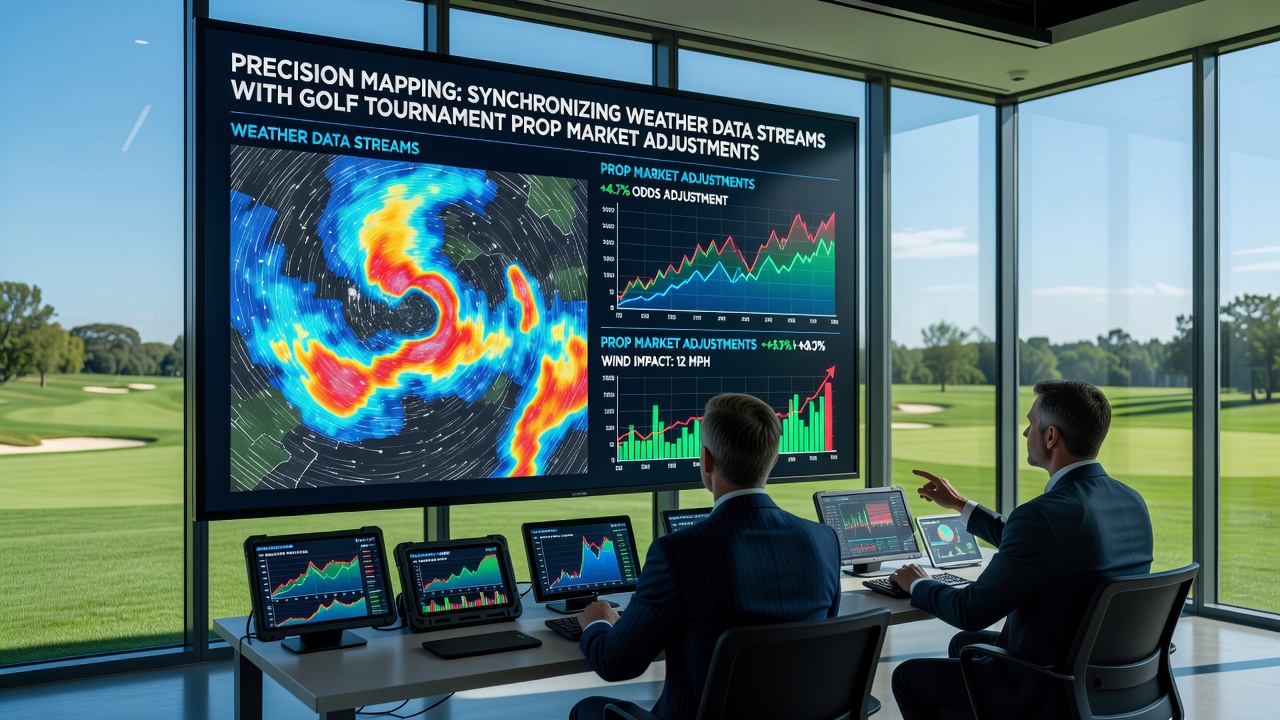
Precision mapping integrates live weather data streams directly into golf tournament prop market systems, and operators adjust player performance lines accordingly throughout major events. Data from ground sensors, satellite feeds, and Doppler radar combine to track wind speed, precipitation rates, temperature shifts, and humidity levels at specific course locations, while these inputs trigger automated recalibrations in betting markets for props such as birdie totals, driving distance averages, and green-in-regulation percentages.
Analysts note that tournaments held in July 2026, including events on links-style courses, demonstrate faster market responses when weather variables update every thirty seconds. Bookmakers receive continuous feeds that alter over-under lines on total strokes for individual players, and algorithms factor in how crosswinds above fifteen miles per hour reduce fairway hit rates by measurable percentages. Those adjustments occur without manual intervention once thresholds are met, which keeps prop odds aligned with current conditions on the course.
Data Streams and Market Synchronization
Real-time synchronization relies on application programming interfaces that connect meteorological providers with betting platforms, and this connection allows prop markets to reflect environmental changes as they develop rather than after delays. Research from the National Oceanic and Atmospheric Administration indicates that localized wind gust data improves forecast accuracy for golf-specific outcomes when integrated at sub-kilometer resolution. Operators apply these readings to modify lines on approaches from certain distances, because headwinds increase club selection errors and tailwinds extend carry distances beyond standard models.
Multiple data layers process simultaneously, and course elevation maps merge with atmospheric pressure readings to predict how balls behave on elevated greens during afternoon rounds. When humidity rises above seventy percent, prop markets for putts per round often shift because moisture affects green speed and ball roll. Observers report that these layered inputs create tighter spreads in player performance props, especially during rounds where weather changes rapidly across different holes.
Impact on Specific Prop Categories
Driving distance props respond most directly to wind and temperature data, and systems lower expected yardage totals when sustained winds exceed twelve miles per hour from the left or right. Temperature drops below sixty-five degrees Fahrenheit increase air density, which shortens carry and prompts corresponding downward adjustments in over-under lines. Market makers incorporate these calculations into live updates, and the result appears in revised odds within minutes of each weather packet arrival.
Putting and approach props incorporate green firmness indices derived from rainfall accumulation totals, and heavy dew formation overnight alters surface conditions in ways that affect first-putt success rates. Data indicates that courses with recent rainfall see measurable increases in three-putt frequencies, which feeds directly into adjusted player props for total putts. Synchronization ensures these environmental factors reach the market before significant play occurs on affected holes.
Technological Infrastructure Behind the Adjustments
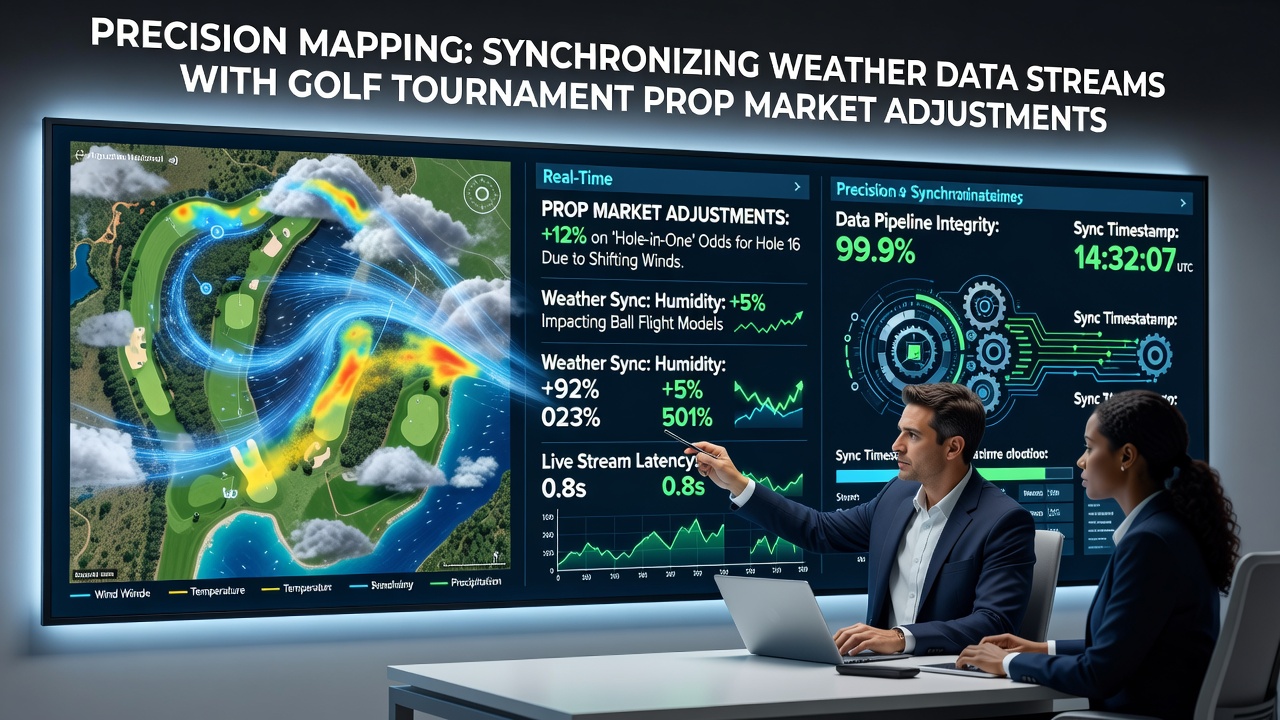
Mapping platforms combine stationary weather stations with mobile units placed along fairways, and these networks transmit data packets that include vector wind measurements at multiple heights above the turf. Betting engines parse the incoming streams and apply statistical models calibrated against historical tournament results under similar conditions. The models generate probability distributions for each prop outcome, and those distributions determine new line values that replace earlier static estimates.
European Centre for Medium-Range Weather Forecasts provides supplementary ensemble predictions that extend several hours ahead, and operators blend these longer-range outputs with immediate sensor readings. This combination reduces lag between weather shifts and market responses. Systems flag anomalies such as sudden gust spikes or unexpected rain cells, then trigger manual review protocols when automated thresholds are exceeded, which maintains accuracy while preserving operational speed.
Regional Variations and Tournament Examples
Links courses in coastal regions experience more pronounced wind effects, and precision mapping accounts for salt air influences on equipment and ball flight. Inland parkland layouts show greater sensitivity to temperature inversions and localized fog banks that reduce visibility and alter player decision-making. Data collected during past Open Championships demonstrates that prop markets incorporating these variables maintain tighter alignment with actual scoring outcomes compared with systems relying on generalized forecasts.
July events often feature afternoon thunderstorms that develop quickly, and mapping tools detect moisture convergence zones before they reach the course. Operators adjust round-total props and individual hole performance lines accordingly, which prevents large discrepancies between offered odds and realized results. Continuous calibration against on-course measurements keeps the synchronization process responsive across different geographic settings.
Conclusion
Precision mapping of weather data streams produces measurable improvements in how golf tournament prop markets respond to changing conditions. Integration of sensor networks, radar inputs, and forecast ensembles enables adjustments that track environmental variables in real time. Operators who maintain these synchronized systems record closer correspondence between offered lines and observed outcomes across driving, approach, and putting categories. Continued refinement of data resolution and model calibration supports further alignment between weather dynamics and prop market accuracy during peak tournament periods.